
In its 'Right of Reply', India also rejected the 'fanciful and misleading' remarks by the Pakistani envoy to the United Nations.

SP has gained a majority in the 100-member Uttar Pradesh legislative council. The party had earlier faced difficulty pushing through its legislative in the upper house due to lack of numbers.

December 3, 2021 marks 50 years since the beginning of the 1971 War which ended in a decisive military victory for India and the liberation of Bangladesh. Most analysts of the 1971 War agree that the IV Corps dash across the mighty Meghna river led by the brilliant General Sagat Singh was the turning point in the war, recalls military historian Colonel Anil A Athale (retd).

Fadnavis said preliminary reports made available to him stated that the tigress was shot after she attacked the forest staff trying to tranquilise her.
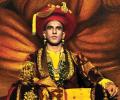
Sanjay Leela Bhansali's Bajirao Mastani has ruffled quite a few feathers among the descendants of the Peshwa and his Muslim wife.

'I don't know who is deciding Indian foreign policy today. I don't know who is deciding how India deals with Pakistan,' former Union minister Ram Jethmalani takes on the Modi government.

We celebrate Independence Day with this special feature, published on Rediff.com in January 2013.
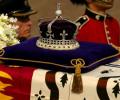
Disposing of a plea seeking directions to bring the treasured diamond back to India, a bench headed by Chief Justice J S Khehar said it could not ask a foreign government not to auction a property.

'Some of his decisions were not so good, but his intentions were always guided by a deep national interest.'

Vajpayee's ashes will be immersed in rivers in all the districts in Uttar Pradesh -- his karmabhoomi.

Srinu Bugatha, Sudha Singh win Indian Elite category.
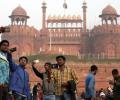
'How can the monument where the prime minister unfurls the flag on Independence Day, in a ceremony broadcast and telecast nationally, be maintained by a private entity?' asks Jyoti Punwani.

Solicitor General Ranjit Kumar, appearing for the government, said this was the stand of the Culture Ministry.

Taking exception to Health Minister Harsh Vardhan not mentioning the death of healthcare workers due to Covid-19 in his statement in Parliament, the Indian Medical Association has published a list of 382 doctors who died due to the viral disease and demanded that they be treated as "martyrs".
The Rajya Sabha elections in Uttar Pradesh on Saturday saw cross-voting by a BJP MLA while another party legislator claimed that she was prevented from voting.
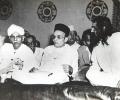
'If they were really serious (about conferring the Bharat Ratna on Savarkar) what were they doing for the last five years?' 'Why do they have to take so long?' 'Gandhi himself never got the Bharat Ratna so it does not really matter.'

'I am very sure that Rajnikanth, a patriot and a spiritual person, will not do this movie which is about a tyrant, killer and murderer,' BJP leader H Raja tells Syed Firdaus Ashraf/Rediff.com

'When it vanishes as a national force (meaning when it can no longer get sufficient votes to hold onto its symbol, the hand) it will not have been the first large Indian party to die,' says Aakar Patel.
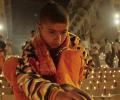
Sumit Bhattacharya paradrops into the eastern Uttar Pradesh temple city to find it enjoying its moment in the national sun.

A summary of sports events and persons who made news on Saturday.

Ever heard of 'gosht ka halwa' or 'dal ki dulhan'? Avantika Bhuyan profiles a battery of food enthusiasts who are out to make sure that you do.
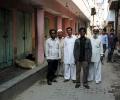
Right from the beginning, the State abdicated its responsibility in fixing the blame for the Hashimpura massacres or getting justice for the victims.

Bhim denotes Dalit icon Bhimrao Ambedkar, while Mim denotes the letter 'M' in the Urdu alphabet; the party used the slogan effectively in the 2014 Maharashtra assembly elections
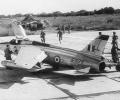
'As the IAF kicks off another round of myth-making -- launching a year-long commemoration of the 50th anniversary of the 1965 India-Pakistan war -- it is worth remembering how little there was to celebrate in those September days when the underdog PAF got the better of the IAF in raid after raid, dogfight after dogfight.'
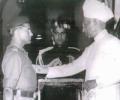
Decorated with a Vir Chakra for leading an attack that destroyed four tanks, Risaldar Ayub Khan shared a name with the Pakistani president who ordered the invasion of India in 1965. India's Ayub came from a family of soldiers and made his country proud.
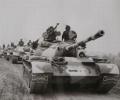
The 1965 war teaches us that war by escalation is a real possibility. Despite clear threats, Pakistan never believed that India will ever cross the international border. In the age of nuclear deterrence, this failure to deter Pakistan is the central lesson of 1965, says Colonel Anil Athale (retd).

'In her insecurity, she destroyed the institutions of democracy.' 'She packed Parliament with her supporters with loyalty being more important than ability; she superseded judges; she corrupted the civil service.' 'She knew how to use people against each other and was quite a master of that.' 'She would do this with calculated skill and in the bargain cause enmity between brothers, split up families.'

'India was in no position to wage another war in 1965, having suffered a morale-shattering defeat in 1962. The three services were in the middle of a modernisation and expansion phase and therefore not fully trained or battle-ready.'
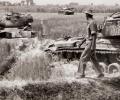
Declassified US documents of the era indicate.

Shatranj Ke Khilari was Satyajit Ray's first Hindi film. The Master set the Premchand story against the backdrop of the First War of Independence in 1857. Bijoya Ray, his wife, reveals fascinating glimpses behind the making of the epic in this exclusive excerpt from her memoir.

'Pakistan's recent utterances and tendency to use pinpricks to try our patience appear reminiscent of 1965. We are a strong nation, emerging stronger,' says Lieutenant General Syed Ata Hasnain (retd).

Glimpses of the final days of the 1965 War, as seen from the diary then defence minister Y B Chavan maintained during the war.

'We don't know what the reasons were that we gave back the Haji Pir Pass which was strategically very important. Today the entire infiltration into Kashmir takes place from that area. If we had retained that post that we had captured, things could have been different.' 'A lesson we need to learn is if you start losing the gains of war at the negotiating table, they become a disincentive for future wars,' says Lieutenant General D B Shekatkar (retd), reviewing the lessons from the 1965 War.
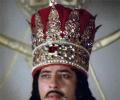
Shatranj Ke Khilari was Satyajit Ray's first Hindi film. The Master set the Premchand story against the backdrop of the First War of Independence in 1857. Bijoya Ray, his wife, reveals fascinating glimpses behind the making of the epic in this exclusive excerpt from her memoir.

'In her insecurity, she destroyed the institutions of democracy,' says Khushwant Singh.
 © 2026 Rediff.com - Advertise with us - Disclaimer - Privacy Policy - Sitemap - Feedback - About us - Terms of use - Grievances